

 One of the surest ways to get into trouble is to try to dodge it. And the longer you ignore it, the worse it gets, until it passes from the acute stage into the chronic. And you carry out your policy of dodging trouble until you have developed a fine large flock of chronic kickers as your especial charge.
When you have arrived at this point you have become a liability to your firm, but the chances are that you are still imbued with the sophistry that got you into this condition and are not at all displeased with yourself. So you drift along with your back turned to the truth until your employer is compelled to almost resort to mayhem to get rid of you, if some disgruntled customer doesn’t beat him to it.
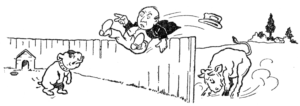
“Trouble” is one of the most important factors in our lives and is just as bad as we make it. When the Company has a thirty minute outage early Saturday night and on Monday morning you find a stack of complaints on your desk, do you ignore them? When Krabb the Hatter telephones his periodical complaint of low voltage, high bills, lamps burning out, etc., do you walk clear around the block to keep from passing his store? Are you following what looks to you to be the line of the least resistance by dodging anything that looks like trouble? If you are, you’re on your way to the discard with the rest of the 9 spots.
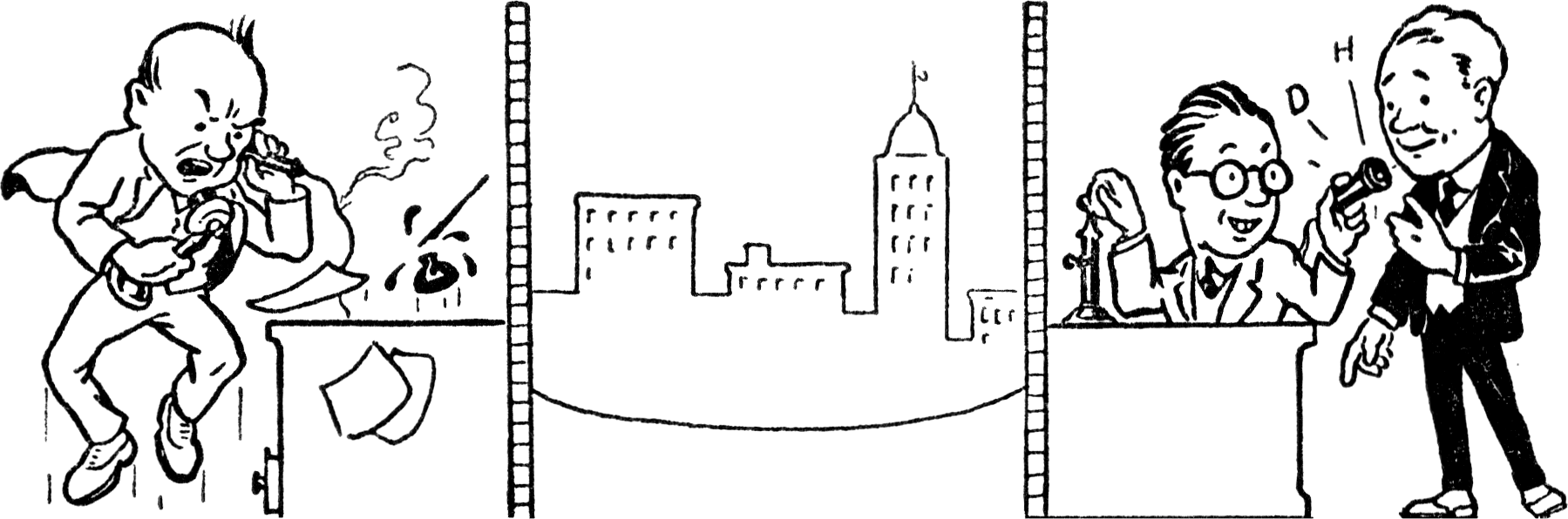
“Trouble” is a myth. When you see anything that even remotely resembles it, “bust” right into it. Take the test lamp of your experience and try out the branch circuits of the complaint one at a time. You will soon uncover the cause of the condition and the solution will be ridiculously easy. All that it takes is the courage of your convictions, the knowledge that you are honestly trying to straighten out an honest complaint and presto, all is well. Listen:
Sharkey was the Company’s jinx consumer. It did not make any difference whether it was a bill, a lamp, a meter reading, or the service—everything was always wrong. The fellows in the office got so they took turns taking Sharkey’s periodical abuse when it came over the wire; they would hang up the receiver, saying “Sharkey on the warpath again” and let it go at that.
By a change in the districts, I found myself custodian of Sharkey’s electrical destinies, so to speak, and I decided that the next time he called up and complained, I was going to the mat with him. The opportunity was not slow in presenting itself.
A few days later the clerk said to me, “Here’s Sharkey kicking again, do you want to talk to him.”
“You bet I do,” I replied, as I picked up the instrument and, without further ceremony, said “Good morning, Mr. Sharkey.”
“Good morning, nothing,” returned Sharkey, his voice fairly cracking with wrath. “What are you fellows trying to do—put me out of business? What’s the matter with your light, enough to blind you in some places and can’t see in others,” rattle, rattle, roar, etc.
After a while he paused to take a breath and I interposed, “Are you at the store now?”
“What’s that got to do with it?” he hurled back tame.
“Because I’m coming up there right now if you’ll wait.”
“I’ll wait, but you burned out a 400-watt lamp last night and you’ve got to replace it, you had better bring it along.”

“I’ll be there in a few minutes,” I rejoined.
Five minutes later I walked into his store. I assumed it was he sitting at a desk in the back of the store, so I walked up to him and said, “I’m Kann from the Great Western. What’s the trouble?”
“Trouble,” he screamed in near frenzy, “what are you fellows trying to do to me? I have been complaining about this, that, or the other thing ever since I first started to do business with you.”
“Trouble,” he yelled, “look at here,” and, walking over to a panel board, he proceeded to throw on all the lights in the store. Pointing to the middle fixture, he said, “That’s the lamp you burned out last night and you’ve got to replace it. Look at the way those lamps down there are burning and then look at these.”
I looked and saw at a glance that something WAS wrong. The lights in the rear of the store were burning with unnatural brilliance, while in the front they were glowing a dull red. I immediately concluded that the neutral wire of the 3-wire service had been fused instead of coppered and that the fuse had blown, unbalancing the load. Without further investigation, I telephoned for our trouble-man and then turned to the subject of the burned out lamp.
I first cut out the current from the circuits carrying the 400-watt lamps in the middle of the store, then securing a stepladder, mounted it, removing the offending lamp from the socket and examined it. I could see nothing wrong with it, so, in the presence of Sharkey, I took a lamp of the same size from the next fixture where it had burned brightly and screwed it into the socket whence had come the offending lamp. At my request, Sharkey threw on the switch.
No light! I then put the “bad” lamp in the neighboring socket, Sharkey threw on the switch-light.
“Your fixture is out of order, Mr. Sharkey,” I said sweetly, “Who’s your wireman?”
By this time the trouble-man had arrived, and it had been the work of but a few minutes to correct the trouble at the main service fuses. The lights now burned with equal brilliancy throughout the store—a fact which Mr. Sharkey noted with seeming reluctance.
“Who’s your wireman?” I asked again. “You’ll have to get him to find the trouble in that fixture.”
“All right, I’ll ‘phone him now,” said he grudgingly, “but it seems to me that you fellows should take care of a little matter like that.” As he was now talking to his wireman, I decided to talk on a neutral subject with his clerk.
After finishing at the ‘phone he went back to his desk, sat down, and was seemingly indifferent to the fact that all the lights in the place were burning at three in the afternoon. Suddenly he looked up and yelled at his clerk, “Shut off those damn lights, Jerry.”
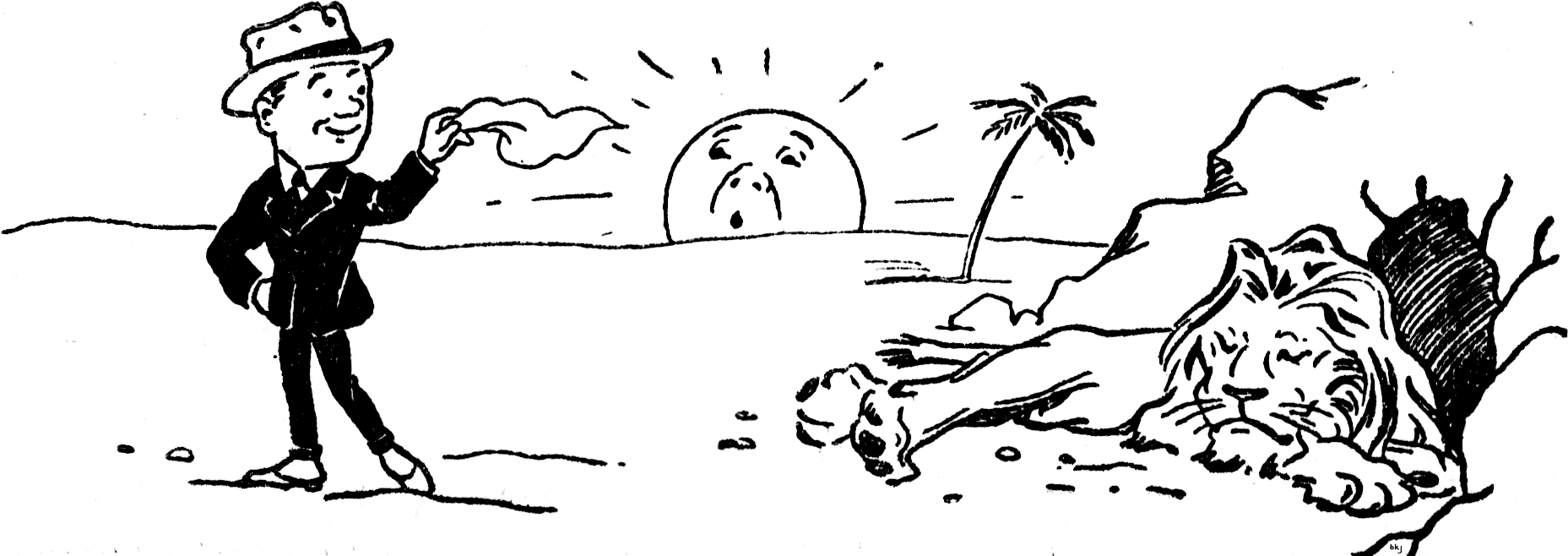
I concluded that my mission was ended, at least for that time, so I left, feeling that I had bearded the lion in his den and come off victor. Since then his complaints have become scarcer and scarcer and we hope some day that they will cease altogether. For he knows now that we are conscientiously trying to serve him and not one whit affected by his blustering, bulldozing manner.
The salesman should remember that even a chronic kicker may have some real trouble, and he should investigate every complaint promptly and courageously and an equitable solution will always be found. If he does not meet trouble unflinchingly and stay with it to its conclusion, he will never develop capacity sufficient for handling “real” problems, and he will probably be found in the evening of his life hunting for a job that contains no trouble and complaining bitterly of his hard luck.
